

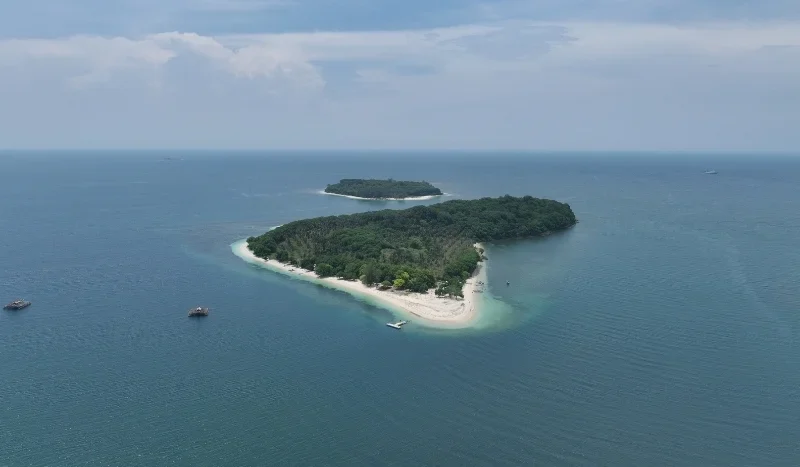
Coral Bleaching Crisis Hits Gili Nanggu as Global Heatwave Deepens
Marine conservationists warn that Gili Nanggu — a small island off Lombok, Indonesia — is facing severe coral bleaching, part of a broader environmental emergency defined by rising sea temperatures and global‑scale reef stress.
The bleaching appears amid what scientists describe as the ongoing global bleaching event, which since 2023 has exposed more than 80% of the world’s coral reefs to heat stress.
Rising Sea Temperatures and Rapid Coral Decline
Researchers monitoring the waters around western Lombok note a sharp decline in healthy coral cover. Between 2002 and 2016, the coral reef area in the North Sekotong region shrank from 455.68 hectares to 367.46 hectares — a loss of 17.5%. The decline accelerated in recent years, coinciding with spikes in sea surface temperatures.
Local surveys document damage to reef biodiversity, including marked reductions in reef fish populations and bleaching‑induced coral mortality.
Repeated Bleaching Events Taking Toll on Lombok Reefs
Gili Nanggu’s bleaching is not isolated. The broader region of Sekotong and West Lombok has been hit multiple times — notably during the mass bleaching events of 2016 and 2020. In 2020 alone, scientists detected signs of widespread bleaching, exacerbated by the warmest sea surface temperatures in decades and limited monitoring due to pandemic disruptions.
Past bleaching waves have triggered drastic drops in coral recruitment — the generation of new, young corals — undermining reefs’ ability to recover.
Local Communities Feel the Impact
The reef degradation threatens both ecological balance and local livelihoods. Gili Nanggu and nearby islands have long depended on diving, snorkeling, and low‑impact tourism tied to vibrant coral ecosystems. As reefs whiten and die, fish stocks dwindle — affecting food, income, and tourism revenue for coastal communities.
Some grassroots efforts — including reef monitoring, mooring‑buoy installation to avoid anchor damage, and community‑led reef restoration projects — are ongoing. Local groups and NGOs emphasize the importance of regulating tourism, limiting destructive activities, and improving waste management to slow further damage.
The Bigger Picture: Indonesia’s Coral Emergency
Indonesia, home to nearly one‑fifth of the world’s coral reefs, lies at the heart of the broader crisis facing reefs across the Coral Triangle and beyond. Marine scientists say that without urgent action against climate change and local environmental pressures — from tourism to coastal pollution — many reef areas risk irreversible collapse.
The current bleaching not only threatens marine biodiversity but also undermines the future of sustainable tourism and coastal communities dependent on coral‑driven economies.
As Indonesia and global partners prepare new conservation strategies, experts stress the need for continuous reef monitoring, climate mitigation, and community‑based stewardship to safeguard remaining reefs.